---
title: How Design Helps You Maximise Your Hotel’s Potential
description: This article explores some key ways in which bespoke contemporary design can help you unlock the full potential of your hotel.
image: https://www.nuconcepts.co.uk/hubfs/How%20Design%20Can%20Help%20You%20Maximise%20Your%20Hotel%E2%80%99s%20Potential.png
---
[01925 648 585](tel:01925648585)[info@nuconcepts.co.uk](mailto:info@nuconcepts.co.uk)
[30th Growth Ave, NY 1003, USA](https://g.page/hubspot-cambridge-25-first?share)[+212-800-1234](tel:+212-800-1234)[info@yourcompany.com](mailto:info@yourcompany.com)
[](https://www.nuconcepts.co.uk/)
[](https://www.nuconcepts.co.uk/)
- ABOUT
- [ABOUT](https://www.nuconcepts.co.uk/about)
- [HOW WE WORK](https://www.nuconcepts.co.uk/how-we-work)
- [TESTIMONIALS](https://www.nuconcepts.co.uk/testimonials)
- [PARTNERS](https://www.nuconcepts.co.uk/partners)
- SERVICES
- [RESIDENTIAL](https://www.nuconcepts.co.uk/services/residential-architecture-services)
- [COMMERCIAL](https://www.nuconcepts.co.uk/services/commercial-architecture-services)
- [LOFT CONVERSIONS](https://www.nuconcepts.co.uk/loft-conversions)
- [GALLERY](https://www.nuconcepts.co.uk/gallery)
- RESOURCES
- [BLOG](https://www.nuconcepts.co.uk/blog)
- [RESIDENTIAL CASE STUDIES](https://www.nuconcepts.co.uk/case-studies/residential)
- [COMMERCIAL CASE STUDIES](https://www.nuconcepts.co.uk/case-studies/commercial)
- [CONTACT](https://www.nuconcepts.co.uk/contact)
[BOOK A VIRTUAL MEETING](https://www.nuconcepts.co.uk/book-a-meeting)
[BOOK A VIRTUAL MEETING](https://www.nuconcepts.co.uk/book-a-meeting)
- ABOUT
- [ABOUT](https://www.nuconcepts.co.uk/about)
- [HOW WE WORK](https://www.nuconcepts.co.uk/how-we-work)
- [TESTIMONIALS](https://www.nuconcepts.co.uk/testimonials)
- [PARTNERS](https://www.nuconcepts.co.uk/partners)
- SERVICES
- [RESIDENTIAL](https://www.nuconcepts.co.uk/services/residential-architecture-services)
- [COMMERCIAL](https://www.nuconcepts.co.uk/services/commercial-architecture-services)
- [LOFT CONVERSIONS](https://www.nuconcepts.co.uk/loft-conversions)
- [GALLERY](https://www.nuconcepts.co.uk/gallery)
- RESOURCES
- [BLOG](https://www.nuconcepts.co.uk/blog)
- [RESIDENTIAL CASE STUDIES](https://www.nuconcepts.co.uk/case-studies/residential)
- [COMMERCIAL CASE STUDIES](https://www.nuconcepts.co.uk/case-studies/commercial)
- [CONTACT](https://www.nuconcepts.co.uk/contact)
[Book A Discovery Call](https://www.nuconcepts.co.uk/book-a-meeting)
blog
#### Share this
[Share on X](https://x.com/intent/post?url=https://www.nuconcepts.co.uk/blog/how-design-help-maximise-hotels-potential&text=How+Design+Helps+You+Maximise+Your+Hotel%26rsquo%3Bs+Potential) [Share on Facebook](https://www.facebook.com/sharer/sharer.php?u=https://www.nuconcepts.co.uk/blog/how-design-help-maximise-hotels-potential&t=How+Design+Helps+You+Maximise+Your+Hotel%26rsquo%3Bs+Potential) [Share on LinkedIn](https://www.linkedin.com/shareArticle?mini=true&url=https://www.nuconcepts.co.uk/blog/how-design-help-maximise-hotels-potential&t=How+Design+Helps+You+Maximise+Your+Hotel%26rsquo%3Bs+Potential)
# How Design Can Help You Maximise Your Hotel’s Potential
by [**Vishal Verma**](https://www.nuconcepts.co.uk/blog/author/vishal-verma) on Dec 17, 2025, 10:00:01 AM
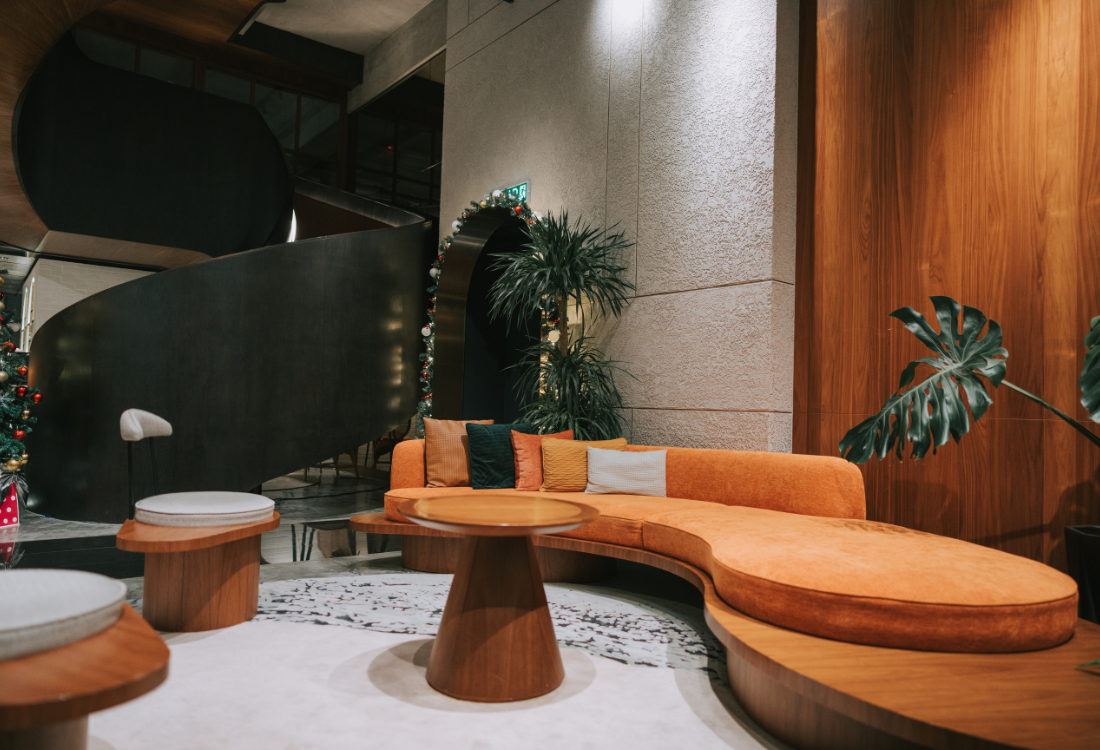
The hospitality sector is defined by experience. When a guest steps into your hotel, every element of design, [layout](https://www.nuconcepts.co.uk/blog/layout-of-hotel-influence-guest-experience), lighting, acoustics, and comfort shapes their stay. Creating a thoughtful, guest-centric environment forms a strong foundation for your hotel’s reputation and long-term success, helping set your property apart and respond to evolving needs with flexibility and purpose. This article explores some key ways in which bespoke contemporary design can help you unlock the full potential of your hotel.
[](https://www.nuconcepts.co.uk/hs/cta/wi/redirect?encryptedPayload=AVxigLKwVZ4MW9p0%2BnFsXAk8mU1zLEwQVI1ewOg9%2FvqCZt7lhcDija95A4W7a4jZWhsNmivg5%2BmBPgWoFiNwded6C6IbtqJxnBfO%2FEjdeSCTagxRD7YGo0s0LijAXe3dMVYU55vzbi7byv9wdfdpQB7y%2FA72bJK4T83KVo%2BPz4RupsfWfGBcbW1Qk9KEKF8wCNvzHmEgkGFNXoT5CIgD5TOv9%2B4%3D&webInteractiveContentId=184041737796&portalId=6616482)
## **Create A Memorable Identity With A Unique Hotel Design**
A [hotel’s design](https://www.nuconcepts.co.uk/blog/enhance-hotel-through-layout-and-design), layout, and visual appearance are a core part of its identity. With so many options available to guests and strong competition from Airbnb and the holiday rental sector, a memorable environment can become your hotel’s most compelling selling point. Guests often look for something distinct from a hotel, a place that tells a story they cannot find elsewhere.
Consider how elements like local materials, commissioned work from local artists, or a design concept inspired by the surrounding landscape can help communicate your values and establish your brand. In practice, this might involve:
- Deliberately choosing a theme that resonates with your target market
- Creating signature spaces, such as a lobby or lounge, that embody your hotel’s identity
- Thoughtful details that invite positive word-of-mouth and foster a lasting first impression
So, why is [commercial design](https://www.nuconcepts.co.uk/services/commercial-architecture-services) important? Because hotels that prioritise individuality in their commercial building design often find their guests turn into advocates, sharing the experience with friends, colleagues, and online communities. This organic engagement can give your hotel enduring appeal and keep guests coming through your door year after year.
## **Design Spaces That Guests Will Love To Return To**
Guests consider comfort and atmosphere in their choice of accommodation just as much as location or proximity to amenities. The way a space makes people *feel* is closely tied to guest satisfaction and can make the difference between a return visit and a bad review. A well-designed hotel establishes clear pathways, an intuitive navigation, and breakout spaces where guests can genuinely relax.
Some approaches to consider are:
- Prioritising natural light and cross-ventilation to foster a bright, open feel to your lobby and shared spaces
- Using soft acoustic materials in corridors and bedrooms to encourage rest and quiet
- Facilitating easy transitions between private and shared spaces
- Selecting finishes and furnishings that invite guests to linger
Hotels' architecture and design that puts well-being and convenience at the centre can help transform one-off visits into annual rituals, as well as a stream of recommendations. Each design decision works towards building familiarity and comfort, making guests feel both cared for and at home in your hotel.
## **Build Sustainable Spaces That Promote Well-Being**
Sustainability is now an essential consideration when developing or updating your hotel. Many guests recognise and value efforts to create environmentally responsible spaces, and these decisions also benefit your commercial property long-term. Prioritising high-quality and ethically sourced materials, energy efficiency, and balanced acoustics results in spaces that are not only attractive but also resilient and cost-effective to maintain.
## **Turn Your Hotel’s Design Into A Marketing Powerhouse**
First impressions are increasingly made online, often before a guest even steps through your front door. Unique and thoughtful design choices can provide the UGC (user-generated content) visuals and social media stories needed to power your marketing strategy. Guests are quick to share photographs and reviews on Instagram, WhatsApp and Facebook, meaning your architecture and interiors play a crucial role in your brand’s digital presence.
Some ideas include:
- Designing “wow” moments and visual highlights that are easy to capture and remember
- Using a consistent ‘design narrative’ across both offline and online touchpoints
- Highlighting unique features and thoughtful details in your digital content
By linking your design strategy with your marketing efforts, you create a cohesive story that speaks to potential guests. This approach helps improve occupancy rates by attracting new visitors and encouraging return bookings.
## **Keep Your Hotel Design Flexible And Responsive**
No [hotel](https://www.nuconcepts.co.uk/blog/can-every-house-have-loft-conversion) stays the same year on year. Guest expectations shift, technology evolves, and new business models (like hybrid work-travel) require hospitality spaces to adapt accordingly. The most successful hotel and guesthouse owners treat design as a living process, updating and evolving their spaces without losing their core identity.
To future-proof your property:
- Invest in adaptable spaces: meeting rooms that convert to event spaces, flexible lounge layouts, and modular furniture that responds to different guest groups.
- Schedule regular design reviews: ask your team and guests what’s missing, what’s working, and where small upgrades could make a visible difference.
- Embrace technology in ways that feel natural: keyless check-ins, dedicated remote working spaces, and integrated charging or smart controls.
Being responsive and proactive about design changes helps prevent your property from feeling out-of-date and can also create new commercial opportunities as guest needs shift.
## **Moving Your Hotel Forward**
If you’re considering how to unlock new potential or respond to changing priorities in your hotel, take time to reflect on what matters most to your guests and how design can help meet those needs. Our team are here to help. To find out why hotel design is important and how NU Concepts can support you, [please get in touch to arrange a free discovery meeting](https://www.nuconcepts.co.uk/book-a-meeting) with one of our architectural designers.
[](https://www.nuconcepts.co.uk/hs/cta/wi/redirect?encryptedPayload=AVxigLJYSEMjca%2B7eFTZsSPB7s88jOQ%2FwxJbwhYpROFYFd1k%2FfUuz8AyqYm1aAxwkckAAbKQFRmSvgCvq%2B8fuqfCWPQH3gOYPvlvG2wIBL8gvcmkS7ISiGyOxIeCUEZpqAGcq05EXN5HJa%2BrCwzTKAblqIxqBbJNFzB8gRB39ldZcJ92EWw%2FGWaPFA%3D%3D&webInteractiveContentId=169973796370&portalId=6616482)
Image Source: [Canva](https://www.canva.com/photos/MAFeYh_imB8-boutique-hotel-lobby-interior-design/)
Topics: [Commercial Architecture](https://www.nuconcepts.co.uk/blog/tag/commercial-architecture) [Hotel Design](https://www.nuconcepts.co.uk/blog/tag/hotel-design)
#### Share this
[Share on X](https://x.com/intent/post?url=https://www.nuconcepts.co.uk/blog/how-design-help-maximise-hotels-potential&text=How+Design+Helps+You+Maximise+Your+Hotel%26rsquo%3Bs+Potential) [Share on Facebook](https://www.facebook.com/sharer/sharer.php?u=https://www.nuconcepts.co.uk/blog/how-design-help-maximise-hotels-potential&t=How+Design+Helps+You+Maximise+Your+Hotel%26rsquo%3Bs+Potential) [Share on LinkedIn](https://www.linkedin.com/shareArticle?mini=true&url=https://www.nuconcepts.co.uk/blog/how-design-help-maximise-hotels-potential&t=How+Design+Helps+You+Maximise+Your+Hotel%26rsquo%3Bs+Potential)
### No Comments Yet
Let us know what you think
[facebook-f icon](https://www.facebook.com/nuconceptsltd) [instagram icon](https://www.linkedin.com/company/nu-concepts/)
### Posts By Topics
- [Residential Architecture (17)](https://www.nuconcepts.co.uk/blog/tag/residential-architecture)
- [Case Studies (7)](https://www.nuconcepts.co.uk/blog/tag/case-studies)
- [Commercial Architecture (6)](https://www.nuconcepts.co.uk/blog/tag/commercial-architecture)
- [Small Extension (6)](https://www.nuconcepts.co.uk/blog/tag/small-extension)
- [Loft Conversions (5)](https://www.nuconcepts.co.uk/blog/tag/loft-conversions)
- [Residential Case Studies (5)](https://www.nuconcepts.co.uk/blog/tag/residential-case-studies)
- [HMO (3)](https://www.nuconcepts.co.uk/blog/tag/hmo)
- [Commercial Case Studies (2)](https://www.nuconcepts.co.uk/blog/tag/commercial-case-studies)
- [Hotel Design (2)](https://www.nuconcepts.co.uk/blog/tag/hotel-design)
- [Two-Story Extension (2)](https://www.nuconcepts.co.uk/blog/tag/two-story-extension)
- [Architecture Technologist (1)](https://www.nuconcepts.co.uk/blog/tag/architecture-technologist)
- [Building Regulations (1)](https://www.nuconcepts.co.uk/blog/tag/building-regulations)
- [Domestic Architecture (1)](https://www.nuconcepts.co.uk/blog/tag/domestic-architecture)
- [Hotel Extension (1)](https://www.nuconcepts.co.uk/blog/tag/hotel-extension)
- [Planning Application (1)](https://www.nuconcepts.co.uk/blog/tag/planning-application)
see all
### Recent Articles
[Designing A Loft Conversion That Actually Works: What Every Cheshire Homeowner Needs To Decide Before Contacting Anyone](https://www.nuconcepts.co.uk/blog/designing-a-loft-conversion-that-works)
[When Should You Use An Architect For A Loft Conversion?](https://www.nuconcepts.co.uk/blog/when-need-architect-for-loft-conversion)
[Planning A Loft Conversion: What You Should Know Before You Start](https://www.nuconcepts.co.uk/blog/planning-loft-conversion-what-know-before)
[HMO Property Design Mistakes And How To Avoid Them](https://www.nuconcepts.co.uk/blog/hmo-property-design-mistakes-how-avoid)
[Signs Your Hotel Needs To Be Redesigned](https://www.nuconcepts.co.uk/blog/signs-that-hotel-redesign-is-needed)
### Search
This is a search field with an autosuggest feature attached.
- There are no suggestions because the search field is empty.
### Subscribe to our blog
#### 
**Telephone:** [01925 648 585](tel:+441925648585)
**Email:** [info@nuconcepts.co.uk](mailto:info@nuconcepts.co.uk)
VAT Number: 158 121 816
Company Number: 7698098
- [HOME](https://www.nuconcepts.co.uk)
- [ABOUT](https://www.nuconcepts.co.uk/about)
- [HOW WE WORK](https://www.nuconcepts.co.uk/how-we-work)
- [CASE STUDIES](https://www.nuconcepts.co.uk/case-studies/residential)
- [GALLERY](https://www.nuconcepts.co.uk/gallery)
- [TESTIMONIALS](https://www.nuconcepts.co.uk/testimonials)
- [CONTACT](https://www.nuconcepts.co.uk/contact)
- [COMMERCIAL](https://www.nuconcepts.co.uk/services/commercial-architecture-services)
- [RESIDENTIAL](https://www.nuconcepts.co.uk/services/residential-architecture-services)
- [MANCHESTER](https://www.nuconcepts.co.uk/manchester-architect-services)
- [LYMM](https://www.nuconcepts.co.uk/architects-lymm-services)
- [KNUTSFORD](https://www.nuconcepts.co.uk/architects-knutsford)
- [RUNCORN](https://www.nuconcepts.co.uk/architects-runcorn-services)
- [ST HELENS](https://www.nuconcepts.co.uk/st-helens-architects)
Copyright © 2026 NU Concepts
- Developed by [JDR Group](https://www.jdrgroup.co.uk)
- Terms
- [Privacy](https://6616482.hs-sites.com/privacy)
- [Cookies](https://6616482.hs-sites.com/cookies)
```json
{
"@context" : "https://schema.org",
"@type" : "BlogPosting",
"author" : {
"@type" : "Person",
"name" : "Vishal Verma",
"url" : "https://www.nuconcepts.co.uk/blog/author/vishal-verma"
},
"dateModified" : "2025-12-17T10:00:01.335Z",
"datePublished" : "2025-12-17T10:00:01.000Z",
"headline" : "How Design Helps You Maximise Your Hotel’s Potential",
"image" : [ "https://www.nuconcepts.co.uk/hubfs/How%20Design%20Can%20Help%20You%20Maximise%20Your%20Hotel%E2%80%99s%20Potential.png" ],
"mainEntityOfPage" : {
"@id" : "https://www.nuconcepts.co.uk/blog/how-design-help-maximise-hotels-potential",
"@type" : "WebPage"
},
"publisher" : {
"@type" : "Organization",
"logo" : {
"@type" : "ImageObject",
"url" : "https://www.nuconcepts.co.uk/hubfs/NU%20Concepts%20Logo-1.jpg"
},
"name" : "NU Concepts"
}
}
```
```json
{
"@context" : "https://schema.org",
"@type" : "LocalBusiness",
"address" : {
"@type" : "PostalAddress",
"addressCountry" : "UK",
"addressLocality" : "Warrington",
"addressRegion" : "Cheshire",
"postalCode" : "WA3 6ZH",
"streetAddress" : "Rutherford House, Warrington Rd, Birchwood"
},
"aggregateRating" : {
"@type" : "AggregateRating",
"ratingValue" : "5.0",
"reviewCount" : "30"
},
"alternateName" : "NU Concepts",
"contactPoint" : {
"@type" : "ContactPoint",
"areaServed" : "GB",
"availableLanguage" : "en",
"contactType" : "customer service",
"telephone" : "+44 0192 564 8585"
},
"geo" : {
"@type" : "GeoCoordinates",
"latitude" : 53.4045,
"longitude" : -2.5206
},
"image" : "https://www.nuconcepts.co.uk/hubfs/51-0-0-0-10000-10000-768.webp",
"logo" : "https://www.nuconcepts.co.uk/hs-fs/hubfs/NU%20Concepts%20Logo-1.jpg",
"name" : "NU Concepts Ltd",
"openingHours" : [ "Mo-Fr 09:00-17:30", "Sa 09:30-13:30", "Su Closed" ],
"priceRange" : "£",
"sameAs" : [ "https://www.facebook.com/nuconceptsltd", "https://x.com/NUConceptsLtd", "https://www.instagram.com/nuconceptsltd/", "https://www.linkedin.com/company/nu-concepts/", "https://in.pinterest.com/nconcepts0652/" ],
"telephone" : "0192 593 1073",
"url" : "https://www.nuconcepts.co.uk/"
}
```