
Share this
by Vishal Verma on Jan 7, 2026, 10:00:00 AM
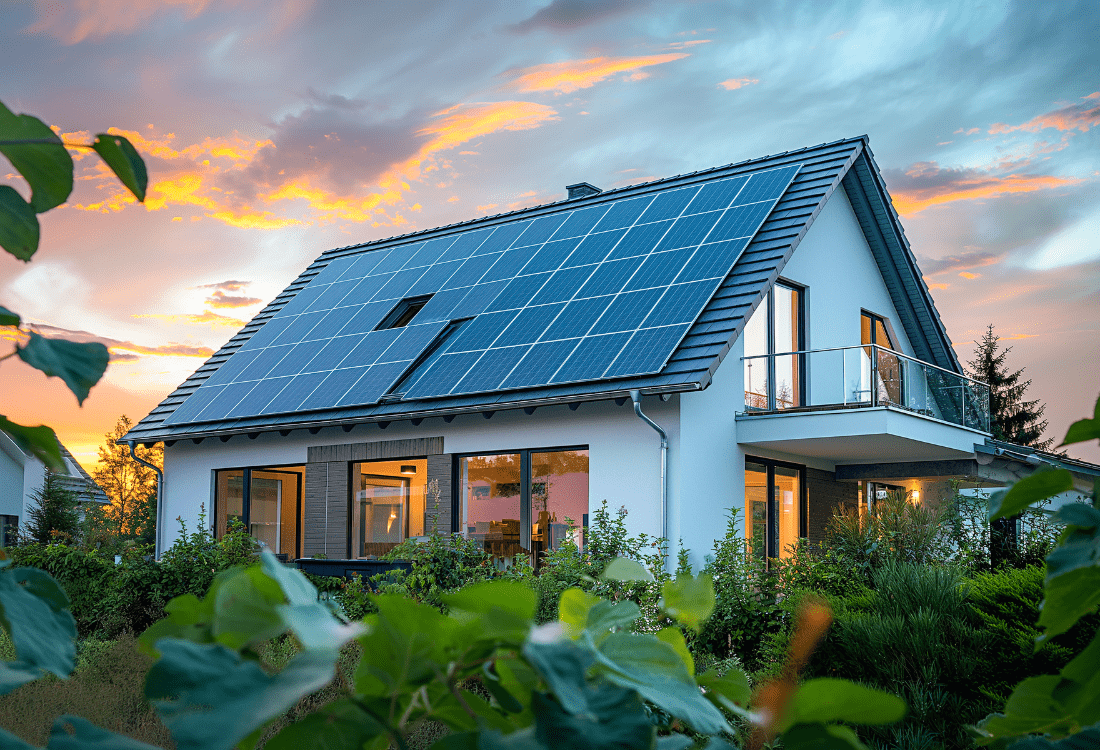
Creating a property that is both environmentally responsible and economically sound is an increasingly important goal for developers. A ‘net-zero home design’ offers a powerful solution, aligning sustainability with long-term value. In this article, we discuss the key principles of how to design a net-zero home or HMO (house of multiple occupancy), breaking down the process into manageable steps.

What Is A ‘Net Zero Home?’
Generally speaking, Net Zero Home Design is a subset of ‘sustainable architecture’, in which a property is designed and built in a way that minimises its environmental impact throughout its life. Specifically, however, a Net-Zero Energy Home is a building constructed to produce as much energy as it consumes over the course of a year, so that it has a ‘net zero’ impact on carbon emissions. This remarkable efficiency is achieved through a two-part strategy: first, minimising energy demand through intelligent design and advanced construction, and second, generating the required energy on-site using renewable sources.
This approach offers significant advantages for property developers and future occupants alike, such as:
- Reduced energy bills: By generating its own power, a net-zero home drastically cuts or even eliminates monthly energy costs for occupants.
- Lower carbon footprint: These homes play a vital role in reducing environmental impact by operating on clean, renewable energy.
- Increased property value: A net zero home is a premium asset, appealing to environmentally conscious buyers and tenants and often commanding a higher market value than other property types.
The Foundation: Planning The Location Of Your Net-Zero Home
The success of a net-zero home design begins before construction. Strategic planning, particularly concerning the property's location and orientation, is fundamental. Unfortunately, you can’t build a net-zero home on any old plot. This is because site selection and orientation are critical for an effective passive design, a method that uses natural elements to heat, cool, and light a home. This involves:
- Maximising solar gain: the building should ideally be positioned to take full advantage of the sun's path throughout the day. In the UK, this typically means orienting the main glazed areas to face south, allowing winter sun to heat the interior naturally.
- Climate considerations: local climate patterns are an essential part of net zero design, and these vary from area to area across the UK. For instance, in London or the South-East, the design could incorporate features that harness the prevailing winds for natural ventilation during warmer months, reducing the need for artificial cooling.
- Shading strategies: overhangs, trees, or architectural fins can be used to block the high summer sun, preventing overheating while still allowing the low winter sun to penetrate and warm the space.
So, How To Design A Net-Zero Home?
Once the site planning is in place, the focus shifts to the building itself. A net-zero home can be seen as a system of interconnected components working together to achieve exceptional energy efficiency. These include:
- A superior thermal envelope: This refers to the shell of the house that separates the inside from the outside. High-performance insulation in the walls, roof, and floor is crucial to prevent heat from escaping in winter and entering in summer, and is the cornerstone of energy conservation.
- High-performance windows: Windows are often the weak points in a building's thermal envelope. Net-zero homes, therefore, require premium window units, typically with triple glazing, low-emissivity coatings, and insulated frames to minimise heat transfer.
- Renewable energy systems: To offset the home's minimal energy consumption, on-site renewable power generation is necessary. Rooftop solar panels are the most common solution for domestic properties, converting sunlight directly into electricity to power the home's appliances.
Smart Energy Management Systems
Hitting the net-zero target isn't just about building an efficient structure, but is also about managing energy use intelligently. Modern technology provides a range of powerful energy management tools to monitor and control energy consumption, which can be considered as the ‘brain’ of the property, making adjustments as necessary to keep the home at peak efficiency
Smart home technology: Automated systems can optimise energy use without requiring constant attention from the occupants. This includes smart thermostats that learn heating patterns, lighting that adjusts based on occupancy, and appliances that can be scheduled to run during off-peak hours.
Real-time monitoring: Energy monitors provide instant feedback on how much electricity is being used and how much is being generated by the solar panels. This data empowers homeowners to understand their consumption habits and make adjustments to further reduce their energy footprint.
This layer of intelligent control is essential for fine-tuning performance and maintaining the delicate "net-zero" balance.
Net-Zero Energy Home Design From NU Concepts
As specialists in residential architecture services, we take a holistic approach to architecture that incorporates net-zero principles alongside the smart use of materials, layout, and design. If you are considering a net-zero project and want to ensure it is planned and executed to the highest standard, we are here to provide the expertise and support you need. Please contact us for more information.

No Comments Yet
Let us know what you think